Artifact-based Computing and User Research
What We Do
Recent advances in sensing, processing, and machine learning are expected to gradually transition our world into a new era where machines take initiative and proactively approach their users, while gradually fading into sensitive application areas with societal and ethical consequences. This development is propelled by new modalities of interaction, such as voice, virtual/augmented reality, emerging sensing opportunities introspecting users, and new capabilities of predicting user needs and intentions.
Main research focus
- Research through design in transdisciplinary settings
- AI-driven assistance and companion systems
- Human-machine and human-AI cooperation in a variety of contexts
- Adaptive and attention-aware information systems
- Explainability, transparency, and accountability of AI systems
- New interaction modalities such as voice and AR/VR
- Human-centered design in all stages from ideation to implementation
- User experience design
- Co-creation of common artifacts
- Quantitative and qualitative evaluation of digital artifacts
- Societal, ethical, and gender-related implications of emerging technologies
Projects
Human-Robot Collaboration
Exploring the different ways we can improve collaboration between man and machine, while leveraging their individual strengths
motor learning
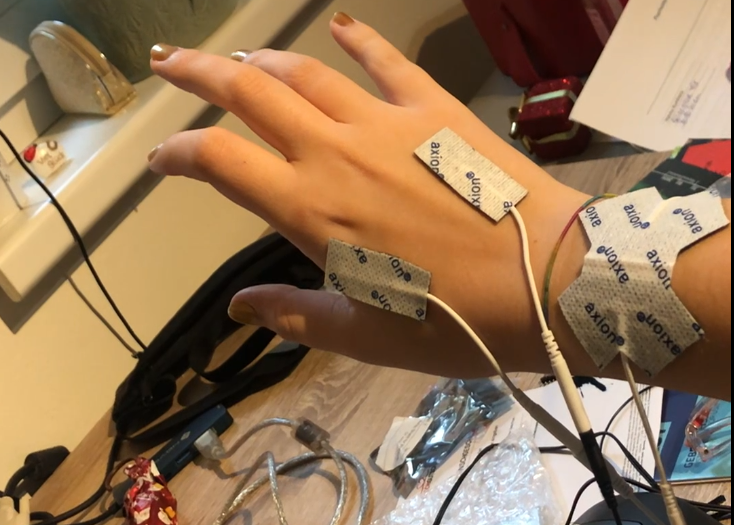
Haptic interactions such as Electric muscle stimulation (EMS) need an understanding of parameters concerning the design of bodily integration systems, and ways to promote appropriate experiences. We investigate the elements that may influence an EMS system’s user experience, notably the user acceptance with having the body actuated, as well as the relationship with motor learning.

eternity bike
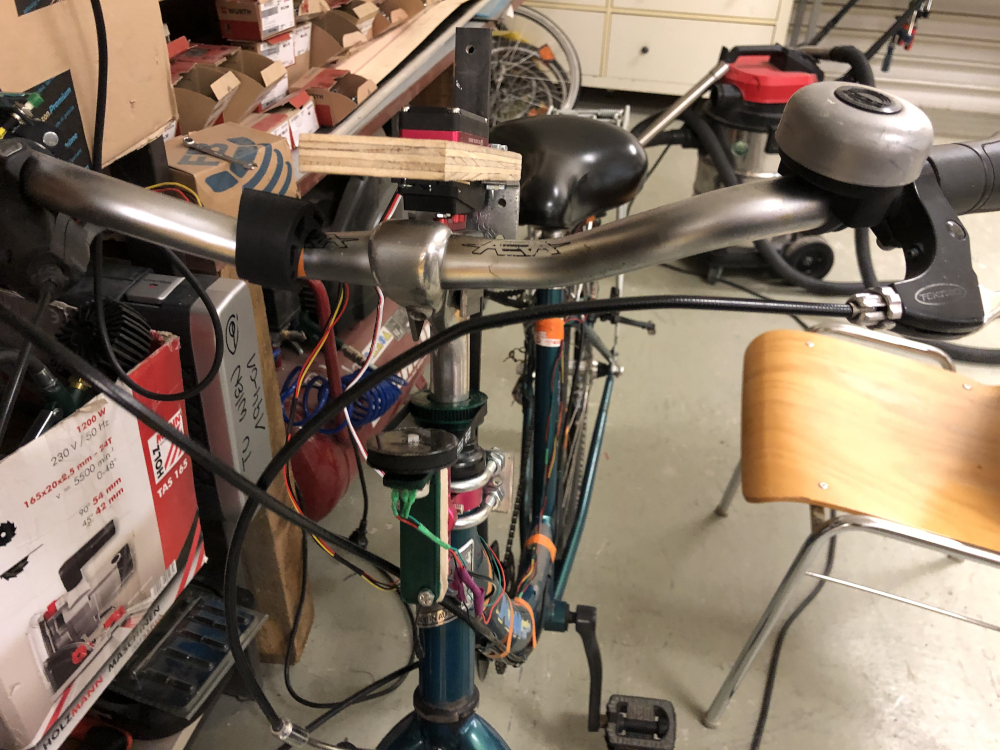
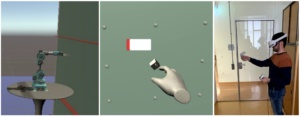
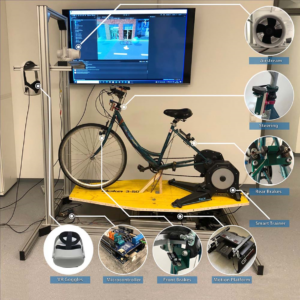
We develop and evaluate the implementation of a self-balancing assisted bicycle, with the aim to integrate safety features, devices and add connected driving features. So far, we have developed a high-fidelity VR bicycle simulator to conduct realistic studies with human participants
aspern.mobil LAB
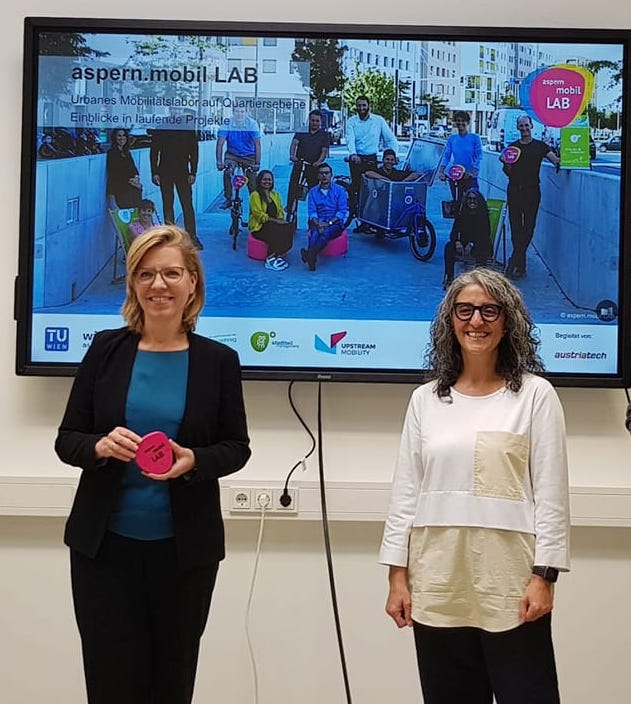
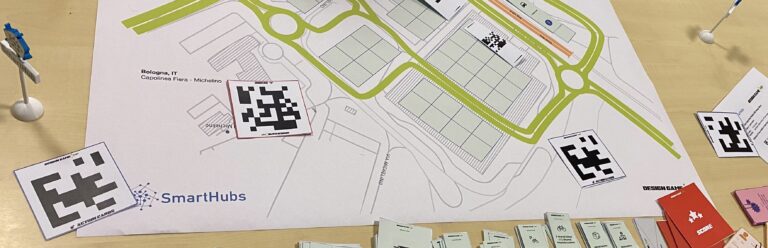
The aspern.mobil LAB creates a space where residents, researchers, municipalities and companies can collectively contribute to the development of new, urban mobility in Seestadt Aspern. It aims to locally establish and support a new culture of mobility and innovation that can become a local flagship project for Austria as a location for innovation. Mobility and innovation culture should be carried by the community emerging around aspern.mobili LAB. The lab serves as an infrastructure for research and development. The core areas of innovative mobility solutions include active mobility, shared mobility as a service, as well as first/last-mile logistics and the analysis of their spatial, economic, ecological and social added value.
Theses
Open Theses:
Behind the Wall: Collaborating with a robot with no direct line of sight (Diploma)
Computer Aided Sustainability: Visualizing Future Impact of Personal Choices on the Environment (Bachelor | Diploma)
Digital Dentist – Investigating the processes involved between patient and dentist (Bachelor)
Improving Driver Take-Over with Reinforcement Learning: A Human-centered Approach (Bachelor | Diploma)
Interactive turn-off guard for cyclists (Diploma)
Investigating Rotational Motion in Virtual Reality Bicycle Simulators (Diploma)
Physically Realistic Force Simulation for a VR Bicycle Simulator (Bachelor | Diploma)
“Green Fifteen” –Concept of dynamic grouping of cyclists in traffic (Bachelor)
Teaching
2022S
- Bachelor Thesis for Informatics and Business Informatics / 187.A99 / PR
- Bachelor with Honors Internship Project / 180.780 / PR
- Beyond the Desktop / 193.109 / VU
- Critical Algorithm Studies / 193.044 / SE
- Design Studies / 187.A27 / VU
- Design Thinking: Explorative Prototyping / 187.B10 / VU
- Interface and Interaction Design / 187.B11 / VU
- Orientation Bachelor with Honors of Informatics and Business Informatics / 180.767 / SE
- Orientation Informatics and Business Informatics / 180.766 / VU
- Projekt aus Media and Human Centered Computing 2 – Artifact-Based Computing & User Research / 193.043 / PR
- Research Methods / 194.078 / SE
- Research Seminar for Master Students / 187.A87 / SE
- Scientific Research and Writing / 193.052 / SE
- Seminar for Master Students in Computer Engineering / 180.778 / SE
- Seminar for Master Students in Logic and Computation / 180.773 / SE
- Seminar for Master Students in Media and Human-Centered Computing / 180.775 / SE
- Seminar for Master Students in Medical Informatics / 180.776 / SE
- Seminar for Master Students in Software Engineering & Internet Computing / 180.777 / SE
- Seminar for Master Students in Visual Computing / 180.774 / SE
- Seminar for PhD Students / 187.A72 / SE
- Seminar Media and Human-Centered Computing / 193.099 / SE
- Socially Embedded Computing / 193.110 / VU
- Sociology of Technology / 187.329 / VU
- Summer/Winter School for Bachelor with Honors / 180.781 / VU
- Theories on Communication and Media / 187.333 / VU
2021W
- Bachelor Thesis for Informatics and Business Informatics / 187.A99 / PR
- Bachelor with Honors Internship Project / 180.780 / PR
- Change Management / 187.A15 / VU
- Design Thinking: Ideation / 187.B09 / VU
- Digital Transformation / 193.084 / VO
- Foundations of Ubiquitous Computing and IoT / 193.095 / VO
- Foundations of Ubiquitous Computing and IoT – Exercises / 193.096 / UE
- Intelligent User Interfaces / 193.106 / VU
- Orientation Bachelor with Honors of Informatics and Business Informatics / 180.767 / SE
- Orientation Informatics and Business Informatics / 180.766 / VU
- Projekt aus Media and Human Centered Computing 1 / 193.042 / PR
- Research Methods / 194.078 / SE
- Research Seminar for Master Students / 187.A87 / SE
- Scientific Research and Writing / 193.052 / SE
- Seminar for Master Students in Computer Engineering / 180.778 / SE
- Seminar for Master Students in Logic and Computation / 180.773 / SE
- Seminar for Master Students in Media and Human-Centered Computing / 180.775 / SE
- Seminar for Master Students in Medical Informatics / 180.776 / SE
- Seminar for Master Students in Software Engineering & Internet Computing / 180.777 / SE
- Seminar for Master Students in Visual Computing / 180.774 / SE
- Seminar for PhD Students / 187.A72 / SE
- Seminar Media and Human-Centered Computing / 193.099 / SE
- Social issues in computing / 187.272 / VU
- Summer/Winter School for Bachelor with Honors / 180.781 / VU
Our People
Staff
External Lecturer
Research Assistant
Research Assistant
Professor
Research Assistant
Secretariat
Student Staff
Research Assistant
Professor
Professor
Student Staff
Student Staff
IT Services
Find us
Favoritenstrasse 9-11
2. Stock (Stiege 3)
1040 Vienna
Austria


Contact:
Office Services
Ioana Nicoara
ioana.nicoara@tuwien.ac.at
+43-1-58801-193407
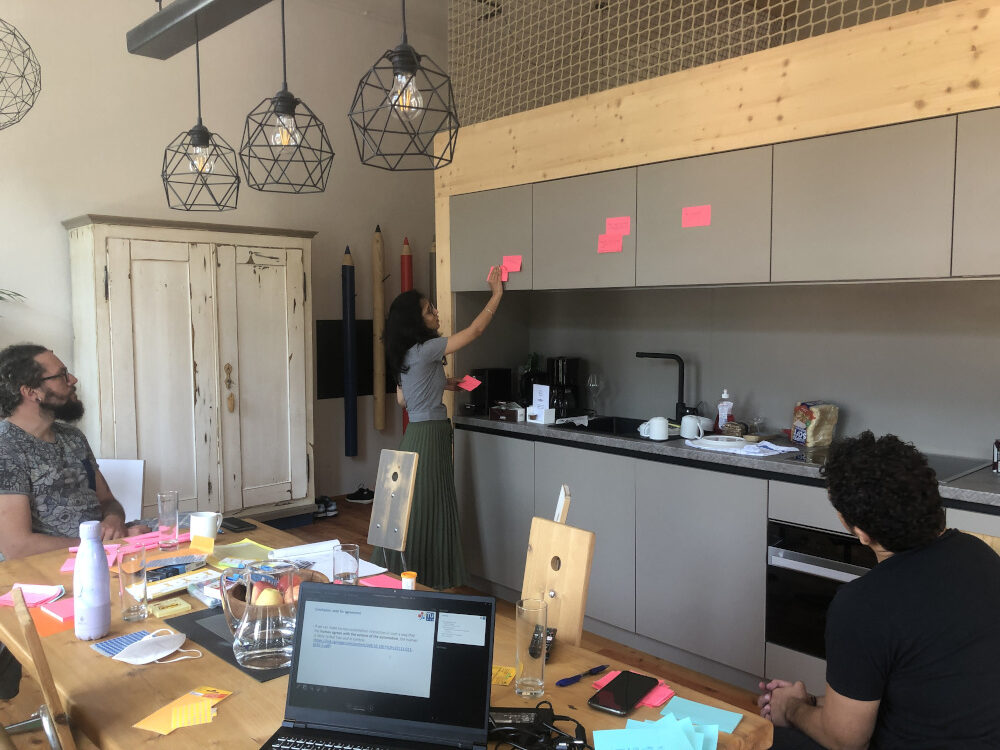
Our students are back to the classroom and are brainstorming on supporting sustainability through prototypes!
2Ambika is presenting our paper "Scenario-based Investigation of Acceptance of Electric Muscle Stimulation" at the Augmented Human Conference Satellite event in Munich!
see the paper here: https://www.researchgate.net/publication/359257445_Scenario-based_Investigation_of_Acceptance_of_Electric_Muscle_Stimulation
We just received the first acceptance notification for a full paper based solely on research conducted in our newly founded group!🥳
Nice project by Adrian Hufnagl and Iris Fiedler as part of my #IUI class: Gesture control for zoom.
https://youtu.be/SacZRPWuReQ
Are you working on new forms of human-AI interactions and experiences? We are looking forward to your abstract by March 18 and your paper by April 1st.
https://www.computer.org/digital-library/magazines/pc/cfp-human-centered-ai